

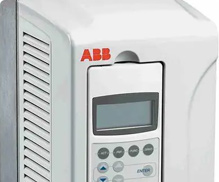
DEIF PCM4.3 Power Control Module: Complete Guide for Industrial and Marine Applications
Meta Description: Comprehensive guide to the DEIF PCM4.3 power control module. Learn specifications, applications, features, and implementation for generator control, marine power management, and industrial automation systems.
Introduction
The DEIF PCM4.3 serves as the central power supply and control module in the Delomatic 4 series, managing generator control and power management across thousands of installations worldwide[^1]. As industrial and marine operations demand increasingly reliable and flexible power management solutions, the PCM4.3 delivers proven performance in harsh environments ranging from offshore platforms to remote land-based power stations.
Hong Kong Saul Electrical Limited (plc module), a leading supplier of industrial automation equipment and DCS system spare parts, specializes in providing DEIF control modules including the PCM4.3 to global manufacturers and marine operators. With comprehensive inventory and technical expertise, plc module supports critical power management applications requiring dependable DEIF components.
This technical guide explores the PCM4.3’s architecture, specifications, applications, and integration considerations to help engineers and operators maximize system performance and reliability.
What is the DEIF PCM4.3 Module?
The DEIF PCM4.3 is a powerful digital controller combining power supply, main control processing, and communication capabilities in a compact 8TE module designed for unmanned operation in demanding industrial and marine environments[^2].
As the foundational component of the Delomatic 4 and Delomatic 400 systems, the PCM4.3 module integrates multiple critical functions:
Power supply management: Accepts 18-36V DC input and distributes regulated power to all connected Delomatic modules with maximum 6A capacity[^3].
Main control processing: Features a 180 MHz processor running Linux 2.6 operating system with 64 MB SD RAM and 32 Kb non-volatile RAM for reliable program execution[^4].
Communication hub: Provides multiple communication interfaces including 3 independent CAN bus lines, RS422/485, ARCNET (electrical or optical), and Ethernet connectivity[^5].
Generator control and protection: Monitors and manages electrical parameters including frequency, voltage, current, speed, and temperature for comprehensive genset control[^6].
The PCM4.3 represents over 25 years of proven field experience in marine and land-based power station applications, refined through deployment in thousands of installations globally. plc module supplies genuine DEIF PCM4.3 modules backed by technical support for seamless integration into existing or new power management systems.
Technical Specifications and Features
The PCM4.3 module operates reliably across extreme temperature ranges from -25°C to 70°C while meeting stringent marine vibration and shock requirements defined by DNV class A+C standards[^7].
Hardware Specifications
| Specification | Details |
|---|---|
| Module Width | 8TE (40.64 mm) |
| Power Input | 18-36V DC, max 6A |
| Operating Temperature | -25°C to 70°C (IEC 60068-2-1, IEC 60068-2-2) |
| Storage Temperature | -40°C to 85°C |
| Climate Rating | 55°C 97% RH condensing (IEC 60068-2-30 Db) |
| Vibration Resistance | DNV class A+C & IEC 60068-2-6 Fc |
| Processor Speed | 180 MHz |
| Operating System | Linux 2.6 |
| Memory | 64 MB SD RAM, 32 Kb non-volatile RAM, 16 MB FLASH |
Input/Output Configuration
Digital inputs: Designed for potential-free contacts with Open/Close detection at 5V/7.5mA, providing wire-break proof monitoring of critical system states[^8].
Relay outputs: One digital relay output (NO) rated for 24V DC at 8A, suitable for controlling circuit breakers and other switchgear[^9].
Analog inputs: Four analog input channels for monitoring voltage, current, frequency, temperature, and pressure sensors.
Communication interfaces:
- 3 × CAN bus: Independent CANbus lines operating at 125/250 kbps for distributed system communication
- 1 × RS422/485: Configurable serial port supporting 4,800 to 57,600 baud
- 1 × ARCNET: High-speed network interface at 2.5 Mbit (electrical or optical)
- 1 × Ethernet: 10/100 Mbit TCP/IP connectivity for remote monitoring and control
- USB service interface: 256,000 baud for configuration and diagnostics
plc module maintains stock of PCM4.3 modules with all communication interface variants, ensuring rapid replacement for critical marine and industrial applications.
Key Functions and Capabilities
The PCM4.3 provides comprehensive generator control including synchronization with voltage adjustment, speed governing with acceleration control, and automated circuit breaker operation for both mains and generator protection[^10].
Generator Control Functions
Measurement capabilities: The module continuously monitors three-phase generator voltages (L1, L2, L3, N), currents (L1, L2, L3), active and reactive power per phase and total, frequency, and power factor[^11].
Electrical protections: Integrated protection functions include over/undervoltage, over/underfrequency, current asymmetry, overload, reverse power, minimum power, overcurrent, thermal overcurrent, overexcitation, and loss of excitation[^12].
Synchronization control: Automated synchronization with voltage adjustment and time supervision enables safe paralleling of generators with mains or other generating sets.
Speed governor: Built-in speed governor with acceleration control function eliminates the need for external governor hardware, reducing system complexity and cost.
Power management: Voltage adjustment and CosPhi control maintain stable generator output. Power ramp function ensures smooth start and stop transitions.
Marine and Industrial Applications
Marine power management systems: The PCM4.3 forms the core of the DM-4 Marine controller, managing up to 15 generators with tie breaker control for complex vessel power distribution[^13].
Land-based genset control: Delomatic 400 systems using PCM4.3 modules control gas engines, diesel generators, and combined heat and power (CHP) installations in remote and decentralized energy generation facilities[^14].
Emergency power systems: Wire-break proof supervision of breaker positions and configurable inputs for fault messages ensure reliable emergency generator operation with automated start/stop sequencing.
plc module provides PCM4.3 modules configured for specific marine classification society requirements (DNV, ABS, Lloyd’s Register) and land-based certification standards, supporting global deployment.
System Architecture and Integration
The Delomatic 4 system architecture uses modular hardware with only four module types – PCM (power and control), IOM (input/output), SCM (synchronizing and current measurement), and POS (positioning) – simplifying system design and reducing spare parts inventory[^15].
Module Positioning and Power Distribution
Installation requirements: The PCM4.3 must be mounted in the leftmost position in the Delomatic rack, as it supplies power to all other modules via the backplane bus[^16].
Rack configurations:
- 24 TE rack: Accommodates PCM4.3 plus 2 additional modules
- 42 TE rack: Supports PCM4.3 plus up to 4 modules
- 60 TE rack: Provides space for PCM4.3 plus up to 8 modules
Power distribution: The PCM4.3 provides galvanic isolation between the power source and connected modules, protecting downstream components from electrical disturbances.
Communication architecture: All modules communicate through the rack backplane, with each module containing its own processor for independent operation. This distributed architecture ensures system resilience – failure of one module does not compromise other module functions.
Integration with External Systems
Ignition and anti-knock systems: The PCM4.3 communicates with external ignition timing controllers and knock detection systems via CAN bus interfaces for gas engine applications[^17].
Emission control systems: Interfaces with lambda sensors, intake manifold pressure/temperature sensors, and combustion chamber temperature sensors for air/fuel mixture optimization.
Building management systems (BMS): Ethernet connectivity enables integration with facility management and SCADA systems for centralized monitoring and control.
Remote monitoring: TCP/IP network access supports remote diagnostics, parameter adjustment, and trending analysis from web browsers or dedicated applications.
plc module offers integration support services for PCM4.3 installations, including communication protocol configuration, system commissioning assistance, and technical documentation for seamless integration with existing infrastructure.
Installation and Configuration Best Practices
Proper installation of the PCM4.3 requires attention to power supply quality, grounding practices, communication cable routing, and environmental protection to ensure long-term reliability in demanding applications[^18].
Power Supply Requirements
Input voltage range: While the PCM4.3 accepts 18-36V DC input, operation at the nominal 24V DC provides optimal margin for voltage fluctuations during genset start sequences.
Current capacity: Size power supply to deliver continuous 6A plus 20% margin to accommodate inrush current during module initialization.
Redundancy: For critical applications, implement redundant power supplies with diode isolation to prevent single-point power failure.
Filtering: Install suppression capacitors near the PCM4.3 power input terminals to attenuate switching transients from contactors and relay coils.
Communication Network Design
CAN bus topology: Use 120-ohm termination resistors at both ends of CAN bus segments. Maximum cable length depends on baud rate – 125 kbps supports up to 500 meters.
ARCNET considerations: For noisy industrial environments, optical ARCNET connections provide superior noise immunity compared to electrical connections.
Ethernet implementation: Use shielded Category 5e or better cabling for Ethernet connections. Implement VLANs to segregate power management traffic from general facility networks.
Serial communication: RS485 connections require twisted pair cables with 120-ohm termination. Avoid running serial cables parallel to power conductors.
Environmental Protection
Enclosure rating: Mount PCM4.3 in NEMA 4/IP65 or better enclosures for marine applications. Industrial installations typically require NEMA 12/IP54 minimum.
Temperature management: Ensure adequate ventilation or forced cooling to maintain module temperature within -25°C to 70°C operating range. Derating may be necessary above 55°C ambient.
Vibration isolation: For high-vibration environments, mount the Delomatic rack using resilient isolators while maintaining sufficient rigidity to prevent resonance.
Moisture protection: Apply conformal coating to PCB assemblies in high-humidity marine environments to prevent corrosion of electronic components.
plc module supplies PCM4.3 modules with various hardware revisions and firmware versions. Our technical team assists with compatibility verification to ensure new modules integrate seamlessly with existing Delomatic system configurations.
Maintenance and Troubleshooting
Preventive maintenance for PCM4.3 systems focuses on periodic verification of power supply quality, communication network integrity, and firmware updates to maximize uptime and reliability[^19].
Routine Maintenance Tasks
Power supply inspection: Measure PCM4.3 input voltage under load conditions quarterly. Voltage should remain stable within 22-28V DC during normal operation and genset start sequences.
Communication diagnostics: Use DEIF utility software to verify CAN bus and ARCNET communication statistics. Elevated error counters indicate cable degradation or termination problems.
Firmware management: Maintain current firmware versions to access latest features and corrections. Document firmware version for all modules to ensure compatibility during future upgrades.
Contact cleaning: Annually inspect and clean all connector contacts using contact cleaner and dielectric grease. Verify torque on screw terminal connections.
Log file analysis: Review event logs monthly to identify trends in alarm frequency, breaker operations, and protection activations that may indicate developing system problems.
Common Issues and Solutions
Module fails to power up: Verify input voltage at terminals 17-18 on the PCM4.3. Check power supply capacity – insufficient current capability prevents proper initialization. Ensure DC polarity is correct.
Communication loss: For CAN bus failures, measure bus termination resistance – should read approximately 60 ohms between CAN-H and CAN-L with network powered down. Replace defective termination resistors.
Erratic measurements: Fluctuating voltage or current readings often result from loose current transformer connections or poor grounding. Verify all measurement input wiring terminates securely.
Module resets randomly: Random resets typically indicate marginal power supply voltage. Monitor voltage during genset start and load transfer – voltage dips below 18V cause brownout resets.
plc module maintains comprehensive inventory of DEIF PCM4.3 modules including various part number revisions (1044230010G, 1044230080C, 2044230080A, 2044230081A) to support immediate replacement requirements. Our technical support team provides troubleshooting assistance for complex system issues.
Applications Across Industries
The PCM4.3’s proven reliability and flexible configuration support diverse applications including marine vessel power management, offshore platform generation, land-based CHP systems, and emergency backup power installations[^20].
Marine and Offshore Applications
Commercial vessels: The PCM4.3 manages main generator paralleling, emergency generator automation, and shore connection management on cargo ships, tankers, and passenger vessels.
Offshore platforms: Controls multiple generators with automatic load sharing and blackout prevention for oil rigs, FPSOs, and wind farm service platforms.
Naval vessels: Meets military specifications for shock, vibration, and EMI/EMC requirements in frigate, destroyer, and auxiliary vessel installations.
Yacht and superyacht: Provides sophisticated power management with silent running modes and hotel load optimization for luxury vessels.
Industrial Power Generation
Gas engine CHP plants: Delomatic 400 systems using PCM4.3 control biogas, landfill gas, and natural gas engines with integrated emission control and heat management[^21].
Diesel generator paralleling: Manages multiple generator sets with automatic synchronization, load sharing, and sequential start/stop for industrial facilities.
Renewable integration: Coordinates diesel generators with solar PV and battery storage systems for hybrid microgrids in remote locations.
Data center backup power: Controls standby generators with fast transfer switching and load management for critical IT infrastructure.
plc module serves customers across marine, offshore, and industrial sectors with rapid delivery of PCM4.3 modules and complete Delomatic system components worldwide.
Comparison with Alternative Solutions
The PCM4.3’s modular Delomatic architecture offers significant advantages over monolithic PLC-based power management systems through reduced commissioning time, simplified diagnostics, and lower long-term maintenance costs[^22].
Delomatic vs. Traditional PLC Systems
| Feature | DEIF PCM4.3 Delomatic | Traditional PLC Systems |
|---|---|---|
| Configuration Complexity | Pre-configured for genset control | Requires extensive programming |
| Commissioning Time | 2-5 days typical | 1-3 weeks typical |
| Marine Certification | DNV, ABS, Lloyd’s approved | Requires custom certification |
| Spare Parts Inventory | 4 module types total | Dozens of I/O card types |
| Diagnostics | Built-in trending and logging | Requires SCADA integration |
| Firmware Updates | Field-upgradeable via Ethernet | Often requires factory return |
Total cost of ownership: While initial hardware costs may appear similar, Delomatic systems reduce engineering labor by 60-80% compared to custom PLC solutions through pre-configured control algorithms and simplified integration[^23].
Upgrade path: The modular architecture enables incremental system expansion – adding generator capacity requires additional IOM and SCM modules without PCM4.3 replacement.
plc module’s experienced technical team helps customers evaluate PCM4.3 Delomatic solutions versus alternative architectures, providing objective analysis based on specific application requirements and long-term operational goals.
Future-Proofing Your Power Management System
Investing in PCM4.3-based Delomatic systems provides long-term value through DEIF’s commitment to backward compatibility, ongoing firmware development, and extensive global support infrastructure spanning over 25 years[^24].
Technology Roadmap
Cybersecurity enhancements: Future firmware releases will incorporate enhanced authentication, encrypted communication, and audit logging to address evolving maritime and industrial cybersecurity standards.
Renewable integration: Continued development focuses on advanced microgrid capabilities including solar/wind forecasting integration and optimized battery charge/discharge management.
Predictive maintenance: Machine learning algorithms analyzing historical operating data will predict component failures before they occur, enabling condition-based maintenance strategies.
Cloud connectivity: Optional cloud gateways will enable centralized fleet monitoring for vessel operators and industrial facility managers with multiple sites.
Long-Term Support Assurance
Spare parts availability: DEIF maintains production and spares inventory for Delomatic systems spanning multiple product generations, ensuring long-term supportability.
Technical documentation: Comprehensive documentation including data sheets, designer’s handbooks, operator manuals, and installation instructions remains available for all PCM4.3 variants.
Global service network: DEIF’s worldwide network of service partners and certified technicians provides local support for commissioning, troubleshooting, and maintenance.
Training programs: DEIF offers regular training courses for operators, maintenance technicians, and system integrators to build internal expertise.
plc module partners with customers to plan long-term power management system lifecycles, recommending upgrade timing, spare parts stocking strategies, and training investments to maximize system longevity and performance.
Conclusion
The DEIF PCM4.3 power control module delivers proven, reliable generator control and power management for demanding marine and industrial applications. Its modular architecture, comprehensive protection functions, and flexible communication capabilities make it an ideal choice for both new installations and upgrades to existing power systems.
Hong Kong Saul Electrical Limited (plc module) maintains extensive inventory of DEIF PCM4.3 modules and complete Delomatic system components, supported by technical expertise to ensure successful integration and long-term operational excellence. Whether replacing failed modules in critical systems or implementing new power management installations, plc module delivers genuine DEIF components with rapid global shipping.
Contact plc module for DEIF PCM4.3 Solutions
For immediate assistance with DEIF PCM4.3 availability, technical specifications, or application support, contact our team:
Phone: +86 18250705533
Email: sales5@xrjdcs.com
Website: https://www.saulplconline.com
WhatsApp: +86 18250705533
Our technical specialists provide expert guidance on DEIF component selection, system configuration, and integration support to ensure your power management system operates at peak reliability.
FAQ
Q: What is the primary function of the DEIF PCM4.3 module?
A: The DEIF PCM4.3 serves as the power supply, main control processor, and communication hub for Delomatic 4 and Delomatic 400 generator control systems[^25]. It monitors electrical parameters, executes protection algorithms, manages synchronization, and coordinates communication between all system modules. plc module supplies genuine DEIF PCM4.3 modules for marine and industrial power management applications.
Q: Can the PCM4.3 operate in harsh marine environments?
A: Yes, the PCM4.3 meets stringent marine environmental standards including DNV class A+C vibration resistance, operation from -25°C to 70°C, and 55°C 97% RH condensing climate rating[^26]. The module withstands shock loads up to 50g and continuous vibration across 3-100 Hz frequency range. plc module provides PCM4.3 modules certified for marine classification society requirements.
Q: How many generators can a single PCM4.3 control?
A: The Delomatic 4 Marine system using PCM4.3 can manage up to 15 generators plus tie breakers and other switchboard equipment[^27]. The modular architecture scales by adding IOM and SCM modules to accommodate additional gensets. plc module assists customers in configuring appropriate module combinations for specific generator quantities and power ratings.
Q: What communication protocols does the PCM4.3 support?
A: The PCM4.3 includes 3 independent CAN bus interfaces (125/250 kbps), RS422/485 serial port (4,800-57,600 baud), ARCNET (2.5 Mbit electrical or optical), and 10/100 Mbit Ethernet[^28]. This comprehensive connectivity enables integration with external systems, remote monitoring, and distributed control architectures. plc module provides technical support for communication network design and configuration.
Q: Is the PCM4.3 compatible with older Delomatic systems?
A: The PCM4.3 is designed for Delomatic 4 and Delomatic 400 system architectures. Compatibility with specific existing installations depends on firmware versions, rack configuration, and connected module types. plc module’s technical team reviews system compatibility and recommends upgrade paths when integrating PCM4.3 modules into existing Delomatic installations.
References
1: DEIF, “Delomatic 400 Gas Data Sheet,” 2020. Based on marine and land-based power station applications over 25 years. https://www.deif.com/media/f5bdscgd/delomatic-400-gas-data-sheet-4921240452-uk.pdf
2: Shenzhen Changxin, “PCM4.3 DEIF Digital Controller,” 2025. DEIF PCM4.3 is powerful digital controller for diesel generator control and protection. https://www.cxabb.com/product/pcm4-3-deif-digital-controller/
3: DEIF, “Delomatic 400 Gas Data Sheet,” 2020. PCM 4.3 power supply specifications: 18-36V DC input, max 6A. https://www.deif.com/media/f5bdscgd/delomatic-400-gas-data-sheet-4921240452-uk.pdf
4: DEIF, “Delomatic 400 Gas Data Sheet,” 2020. Processor 180 MHz, Linux 2.6, 64 MB SD RAM, 32 Kb non-volatile RAM. https://www.deif.com/media/f5bdscgd/delomatic-400-gas-data-sheet-4921240452-uk.pdf
5: DEIF, “Delomatic 400 Gas Data Sheet,” 2020. Interface specifications: 3 × CAN, RS422/485, ARCNET, Ethernet. https://www.deif.com/media/f5bdscgd/delomatic-400-gas-data-sheet-4921240452-uk.pdf
6: Shenzhen Changxin, “PCM4.3 DEIF Digital Controller,” 2025. Input signals: frequency, voltage, current, speed, temperature. https://www.cxabb.com/product/pcm4-3-deif-digital-controller/
7: DEIF, “Delomatic 400 Gas Data Sheet,” 2020. Operating temperature -25 to 70°C, DNV class A+C vibration. https://www.deif.com/media/f5bdscgd/delomatic-400-gas-data-sheet-4921240452-uk.pdf
8: DEIF, “Delomatic 400 Gas Data Sheet,” 2020. Digital input designed for potential-free contacts, Open/Close 5V/7.5mA. https://www.deif.com/media/f5bdscgd/delomatic-400-gas-data-sheet-4921240452-uk.pdf
9: DEIF, “Delomatic 400 Gas Data Sheet,” 2020. Digital relay output (NO)/24V DC 8A. https://www.deif.com/media/f5bdscgd/delomatic-400-gas-data-sheet-4921240452-uk.pdf
10: DEIF, “Delomatic 400 Gas Data Sheet,” 2020. Synchronization with voltage adjustment and time supervision, speed governor with acceleration control. https://www.deif.com/media/f5bdscgd/delomatic-400-gas-data-sheet-4921240452-uk.pdf
11: DEIF, “Delomatic 400 Gas Data Sheet,” 2020. Measurements: voltages three-phase, currents, active/reactive power per phase and total. https://www.deif.com/media/f5bdscgd/delomatic-400-gas-data-sheet-4921240452-uk.pdf
12: DEIF, “Delomatic 400 Gas Data Sheet,” 2020. Electrical protections: over/undervoltage, frequency, current asymmetry, overload, reverse power. https://www.deif.com/media/f5bdscgd/delomatic-400-gas-data-sheet-4921240452-uk.pdf
13: Scribd, “Delomatic 4 Marine Power Management,” 2025. Controller can manage up to 15 generators plus tie breakers. https://www.scribd.com/document/401105464/DM-4-Marine-Data-Sheet-4921240294-UK
14: DEIF, “Delomatic 400 Gas Data Sheet,” 2020. Designed for gas engine/hydro turbine energy plants, decentralized energy generation. https://www.deif.com/media/f5bdscgd/delomatic-400-gas-data-sheet-4921240452-uk.pdf
15: Scribd, “Delomatic 4 Marine Power Management,” 2025. Uses modular hardware with only four module types. https://www.scribd.com/document/401105464/DM-4-Marine-Data-Sheet-4921240294-UK
16: PLC Module, “PCM 4.3 DEIF DGU 0009,” 2025. PCM 4.3 mounted leftmost in rack, supplies power to other modules. https://www.plc-module.com/Product/889.html
17: DEIF, “Delomatic 400 Gas Data Sheet,” 2020. Communicates with ignition systems, anti-knocking systems, gas mix control systems. https://www.deif.com/media/f5bdscgd/delomatic-400-gas-data-sheet-4921240452-uk.pdf
18: AX Controler, “PCM4.3 DEIF Power Supply Module,” 2025. High-performance power module for industrial and marine applications. https://www.axcontroler.com/Other/pcm4-3—deif-power-supply-module—pcm4-3
19: RUNSHENG, “DEIF PCM4.3,” 2025. Ability to monitor and manage electrical parameters in real-time, detect abnormalities. https://www.rsmodules.com/product/processors/deif-pcm4-3/
20: RUNSHENG, “DEIF PCM4.3,” 2025. Widely used in power generation, marine engineering, oil and gas, manufacturing. https://www.rsmodules.com/product/processors/deif-pcm4-3/
21: DEIF, “Delomatic 400 Gas Data Sheet,” 2020. Full gas engine control, integrated emission control, CHP control. https://www.deif.com/media/f5bdscgd/delomatic-400-gas-data-sheet-4921240452-uk.pdf
22: ZZFY PLC, “DEIF PCM4.3 Power Control Module,” 2025. Dedicated power control module for PMS-4 architecture, synchronizing, breaker control. https://www.zzfyplc.com/product/deif-pcm4-3-power-control-module-for-reliable-genset-paralleling-and-busbar-management/
23: DEIF, “Delomatic 400 Gas Data Sheet,” 2020. Designed for unmanned operation, efficient diagnosis, fast reestablishment locally and remotely. https://www.deif.com/media/f5bdscgd/delomatic-400-gas-data-sheet-4921240452-uk.pdf
24: DEIF, “Delomatic 400 Gas Data Sheet,” 2020. Based on generator control system used in thousands of ships and power stations over 25 years. https://www.deif.com/media/f5bdscgd/delomatic-400-gas-data-sheet-4921240452-uk.pdf
25: DEIF, “Delomatic 400 Gas Data Sheet,” 2020. PCM 4.3 is power supply and main control module of Delomatic 400 system. https://www.deif.com/media/f5bdscgd/delomatic-400-gas-data-sheet-4921240452-uk.pdf
26: DEIF, “Delomatic 400 Gas Data Sheet,” 2020. Operating temperature -25 to 70°C, climate 55°C 97% RH condensing, DNV class A+C vibration. https://www.deif.com/media/f5bdscgd/delomatic-400-gas-data-sheet-4921240452-uk.pdf
27: Scribd, “Delomatic 4 Marine Power Management,” 2025. Controller manages up to 15 generators, tie breakers, and other equipment. https://www.scribd.com/document/401105464/DM-4-Marine-Data-Sheet-4921240294-UK
28: DEIF, “Delomatic 400 Gas Data Sheet,” 2020. 3 × CAN 125/250 kbps, RS422/485, ARCNET 2.5 Mbit, Ethernet 10/100 Mbit. https://www.deif.com/media/f5bdscgd/delomatic-400-gas-data-sheet-4921240452-uk.pdf
#DEIFPCM43 #PowerManagement #GeneratorControl #MarinePowerSystems #IndustrialAutomation #DelomaticSystem #GensetControl #PLCModules #PowerGeneration #MarineElectrical


There are no reviews yet.